

The new year is here and so are tons of new trends. We live in a society where going out to eat isn’t merely to get food into our bellies — it’s an experience, how we spend quality time with our friends and family, and a way to enjoy insanely delicious creations by talented chefs while supporting our local economy.
As a lover of a great meal and sharing the passionate stories of chefs all over the world, one of my favorite questions to ask is: what do you think will be trending in the restaurant world in the upcoming year? I asked, and I got answers. Over 300 chefs shared their thoughts with me about this year’s trending topics in restaurants.
From turning to AI to help enhance the consumer experience to a “less is more” attitude when it comes to ingredients (by making sure to source locally and build relationships with farmers) to finding inspiration in lesser talked about cultures, there’s a lot cooking up in kitchens this year.
While I wish I could share every prediction, here are 85 predictions about the dining scene in 2025 from chefs and industry professionals all over the country.
“I hope we see the end of ‘allergies’ that are actually dislikes. If you don’t enjoy mushrooms, don’t choose a tasting menu restaurant expecting tailored dishes for the same price.” – Doug Keane, chef and owner of Cyrus in Geyserville, California
Chefs work really hard curating menus that they feel really showcase what they are passionate about, and it’s not always easy for them to make substitutions in order to accommodate a preference. It’s best as a consumer to review menus ahead of time to make sure you’ll be just as into the food as they are.
With that being said, many restaurants are using AI as a way to make the guest experiencer more personal. I think it’s something we will start seeing more often. While I think cooking is such a personal experience, it’s really interesting to see how chefs are incorporating technology into their kitchens.
“I think we will start seeing more AI-integrated experiences in restaurants. Whether it’s putting chatbots on websites to help with planning special occasions or making reservations to using AI to track dining habits and being able to tailor menu suggestions based on allergies, dietary preferences etc., AI will be a valuable tool for restaurant owners. I’ve already started researching how best to implement AI. Start small and use it in areas that won’t have a huge impact on your bottom line or customer experiences. You can use AI in reservation systems or loyalty programs and be sure to train your staff on how to integrate technology while still focusing on hospitality.” – Melissa Araujo, chef/owner of Alma Café in New Orleans, Louisiana
“Kindness is paramount. And as prices continue to rise, diners need to brace for the reality that many restaurants once accessible to the average American are becoming out of reach. I think Single-item dining experiences, like those inspired by Japan, will rise.” – Andrew Zimmern, award winning celebrity chef and cookbook author
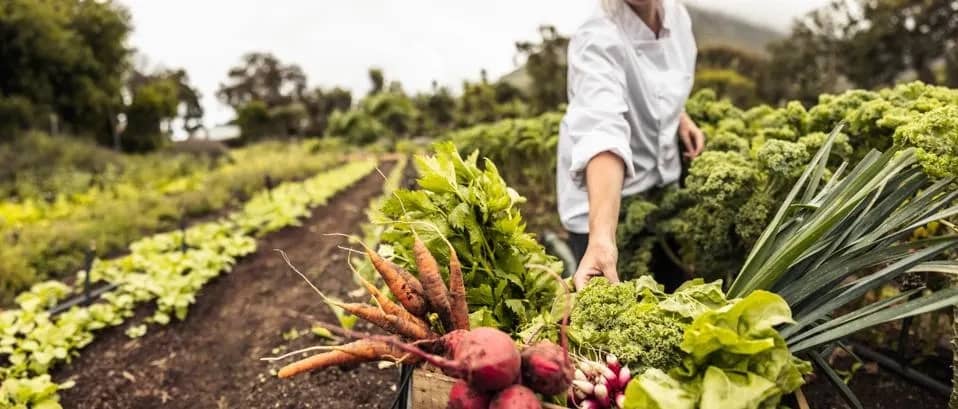
It’s been a big focus in kitchens for a while, but the farm-to-table moment is one that’s definitely here to stay. Not only does it support local farmers, but it also allows chefs to have more knowledge and control when it comes to their dishes and the ingredients they use.
“For 2025, I see a continued growth in minimal intervention in food. Focusing on a “less is more” mentality. How can we as chefs provide our guests with the most flavor with the least amount of ingredients. As the industry continues to grow, so do our purveyors, and working hand in hand with them will allow us to source better quality products which in turn will yield more delicious food.” – Giorgio Rapicavoli, chef and owner of Luca Osteria and Eating House in Miami, Florida
“The future of culinary trends is shifting toward artisanal and immersive experiences where every detail is essential. It’s no longer solely about the food or the flavors; it’s about developing an experience that engages all the senses. At La Mar by Gastón Acurio, we have recently launched a new tasting menu entitled “AMANO by Oka,” that embodies this vision. Every element has been carefully crafted, including the pottery—over 400 pieces that I made by hand—designed to set the stage for an eight-course journey. I believe as chefs we must infuse our character into our cuisine. This is what makes a dining experience truly unique and authentic. It’s no longer solely reliant upon techniques or trends; it’s about putting a piece of ourselves into every dish, every detail, and sharing that passion with our guests. Technology has also evolved into an incredible tool to help us innovate. For example, I collaborated with an AI from NotCo to create a “Not Turtle Soup,” showcasing how technology and creativity can come together to reimagine tradition in exciting, sustainable ways. Algorithms and AI allow us to explore healthier options, develop new flavor profiles, and push boundaries we never thought possible. This is the direction I see for the future; dining as an art form, enhanced by creativity coupled with technology, resulting in a lasting impression that extends far beyond the meal itself.” – Diego Oka, executive chef at La Mar by Gastón Acurio in Miami, Florida
“I think 2025 will mark a considerable shift to quality food and beverage being not enough to stay competitive, and there being an emphasis on providing guests with unmatched hospitality and service. Creating value through making each guest feel truly special and appreciated, and giving more than guests expect, is a trend I expect to see as prices of dining out have increased so dramatically in recent years.” – Kevin Danilo, partner at Batch Hospitality Group with restaurants in Miami, Delray Beach, West Palm Beach, and Fort Lauderdale
“As 2025 begins, we’re seeing a resurgence in immersive and themed dining experiences that transport guests beyond the traditional meal. People are seeking more than just great food—they want to be part of a story. From interactive environments to theatrical elements, these experiences offer an escape from the everyday and cater to a growing demand for personalization and entertainment. It’s clear that dining is no longer just about eating; it’s about experiencing something unique, and this trend is set to redefine the future of hospitality.” – Robert Earl, President & CEO, Earl Enterprises
“Labor-reducing technologies will be more popular than ever and we may see more great restaurants make use of counter service in 2025. As labor becomes more expensive, we expect to see more QR codes, self-service and counter-service. Further, kitchen and bar programs will incorporate more robotics and fancy equipment to reduce personnel needs.” – Jack Zimmerman, CEO of Nova Hospitality in Austin, Texas
“Over the past few years, more and more diners are choosing restaurants that focus on local ingredients and have a story to tell. People care about where their food comes from and want to support small businesses that give back to their communities. It’s part of a bigger shift toward wanting to connect more meaningfully with the places they visit and the people behind them.” – Nancy Dominguez, executive chef of Otto & Pepe in Wynwood, Florida
“Mesoamerican food is the next big movement of 2025. In recent years, Mexican chefs like myself have been taking deep cultural dives to redefine the way America classifies our culture’s cooking, but the next iteration of this goes back centuries, pre-colonization, to peel back the veil on Mexico’s pre-hispanic heritage and its ancestral traditions that have little to no exposure in the U.S. Xiquita is the product of finding my identity as a first-generation Mexican American chef. I felt compelled to go deeper and share the richness of Mexico’s indigenous foodways. Dishes like Sikil Pak or Tikin Xic harken back to Mesoamerica’s complex agricultural systems like that of the Mayans, who established large city-states with farming and trade industries. You may ask, why? By giving historical context to Mexico’s history, I can bring integrity back to ancestral dishes––ultimately, raising the perceived value of Mexican food in America and moving away from this notion that Mexican food is “cheap eats.” – Erasmo Casiano, chef and owner at Xiquita in Denver, Colorado
“I see three trends coming in 2025 – first, traditional fine dining chefs will provide more casual food options to guests, either with additions to their existing menus or via a new concept; second, there will be an increase in previously overlooked cuisines like Scotland, Honduras, and Guatemala, among others; and third a return to traditional fine dining with higher-quality service and overall guest experience.” – Kevin Gillespie, Founder of Red Beard Restaurants Gunshow and Nàdair in Atlanta, Georgia
“I believe 2025 will be the time to celebrate cuisine led by young generations who have been collaborating with high-end chefs and are now ready to insert their expertise and experience into practice. 2025 is a year to promote individuals to create paths for the future. In Miami, up-and-coming chefs have discovered a welcoming environment to develop their concepts, applying what they have learned coupled with passion and refined technique.” – Martha Palacios, executive chef at JARANA in Miami, Florida
“In 2025, Miami’s restaurant scene will continue to evolve with a focus on sustainability, health-conscious dining and global influences. Health driven functional foods will also be on the rise and chefs will be more focused on local, sustainable sourcing of ingredients. I feel that global fusion will remain a key trend as chefs combine Latin, Caribbean and Asian influences in new and exciting ways.” – Allan Esterhuizen, Head Chef at LPM Restaurant & Bar in Miami, Florida
“My predictions for food and restaurant trends in 2025 will center around plant-forward options, functional foods, and technology that enhances the dining experience. Plant-forward trends will make plant-based ingredients the main focus of meals, with an emphasis on bold flavors and innovative cooking techniques, like the parchment-cooked vegetable medley I’m currently working on that enhances natural flavors while keeping nutrients intact. Chefs will continue to explore new plant proteins like fungi and seaweed to create tasty, yet sustainable meals. Consumers will continue seeking wellness-focused meals and functional foods that offer health benefits beyond basic nutrition—like boosting immunity, improving mental clarity, and supporting gut health. Trends in technology will include the rise of ghost kitchens and delivery-only models will further transform the restaurant industry, offering convenience without compromising on quality. Additionally, new AI tools will improve the ordering experience and help personalize meals for customers.” – Paul Pszybylski, Executive Chef and Vice President of Culinary Innovation at California Pizza Kitchen
“Delivery apps and services are on the decline as more and more people grow frustrated with overpaying for arbitrary and hidden fees, only to receive mediocre-quality food. While convenience has always been the main selling point, it’s clear that people crave good food served in a nice restaurant setting. Why pay 110% for only 70% quality when you can dine out and get more for less? Indirectly related, we will also see a trend back toward restaurants focusing on simple food, done exceptionally well. I think people are growing tired of the style of food that is made just to look pretty. They want something tasty, with substance. Superfluous edible flower garnishes? OUT. Intentional, meaningful, and flavorful dishes? IN. Every year I spend in this industry reinforces the truth that “less is more.” We don’t need to reinvent the wheel when it comes to food.” – Braden Chong, executive chef at MIMI Chinese in Toronto and Miami.